Become a food label detective

ben-jerry-dublin-mudslide-ice-cream-nutrition

Hi there my friends! As mentioned in previous blogs, the best way to start your path to wellness is to eat fresh unprocessed foods, meaning eat from the earth and not from packages. However, I am aware there are certain foods that will come in packages and we will continue buying them because they are convenient and also because they are part of what we know. So knowing this is going to be the case, let’s talk about the food label in packaging.

I know some people look at the label in the product, but do you actually understand what it says? This is very important because it provides the information you need to make an informed decision.

So let’s go over the label.

  • Ingredients are listed in descending order by weight. So if you see sugar on the top, for example, put it back on the shelf. There are at least 61 names for sugar used in food labels and many times there are quite a few in one product. If you want to see the list, click here. Another clue is, if you can’t pronounce the word, it is not safe for you so don’t eat it.
  • Avoid partially hydrogenated fats which are also known as trans fats. They are chemically processed, which raises bad cholesterol (LDL) and lowers good cholesterol (HDL). Normally you can find them in bacon, ham, sausages, frozen foods and some can foods.
  • Salt (made of sodium 40% and chloride 60%) is in many foods and we tend to add more before eating it. Look for foods that have no added sodium and if you do, choose those labeled “sodium free”, which have less than 5g in a serving or “low sodium” which have less than 140g per serving. For your reference, 1500 mg of sodium amounts to 0.75 teaspoons or 3.75 grams of salt per day. This amount is the ideal limit for most adults. Check this link for more information.
  • Be aware of marketing tactics. In the United States, for example, the use of the word “natural” to describe human food products is not strictly defined by the FDA. Many foods can have this word in the package but there is nothing natural in them. So again, check the ingredients to see the details.

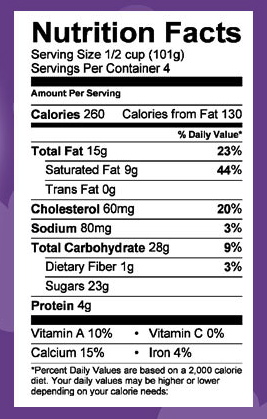
And if you eat two servings, multiply x 2 the quantities of the ingredient. I don’t expect that you carry a calculator to see how much of this or that you are eating, my point is to be mindful of the servings. Because when you multiply that for x 3 meals a day x week x month x year…it all adds up.

images-3

Other points to consider:

  • Some canned foods are healthy options: legumes are good examples. If you don’t have the time to cook or soak beans overnight, canned legumes are a great second best option. Just make sure they are low in sodium (or salt) and there are no added ingredients.
  • Yogurt is not meant to be sweet so to really get the benefits avoid buying sweet yogurt. If you want to add sweetness to it, you can find healthier options such as raw honey, stevia or agave nectar. Also, do not assume that because they are natural sweeteners they don’t add calories! If you are looking to keep your weight down, be aware of the amounts you are consuming.

The American Heart Association (AHA) recommends:

Daily added sugar limits:

Women: 6 tsp (25 g)

Men: 9 tsp (38g)

Children 3-6 tsp (12-25g)

Be aware that I am not even discussing calories here, my main point is the ingredients.  So be a detective! Remember that you are in control, you are the best person to look after yourself.

In my next blog, I will show a video about how to best understand food labeling, so keep an eye on it. (Next week)


Thank you for reading this blog and as always if you are learning something new, don’t forget to share. Everything I share with you is with love and dedication hoping to guide you in your path to become a healthier happier YOU.


Other references

http://elevate.com.au/supermarket-sugar-connection-guide/

http://sugarscience.ucsf.edu/hidden-in-plain-sight/#.WcufHyMrIgp



Is eating healthy really that expensive?

images-14

Last week I was having a conversation with someone I recently met and we were talking about healthy eating and the weekly food shopping. (For the record, she has 2 teenagers and a husband) We both agreed that we could definitely bring changes to our diets and implement them more effectively if we involve every member of the family in the process. However, I didn’t agree when she said, “eating healthy is expensive”. If you think eating healthy is achievable only by shopping at the Wholefoods, Fresh Market (or any other equivalent high-end market in other parts of the country or the world), then she might be right. I personally love both stores, there are quality meats, cheeses, vegetables and fruits (among other stuff) and everything looks and smells good. However, there are other options we should consider when we go shopping for healthy food. I want to share some of them here with you (and you can easily find them in local supermarkets).

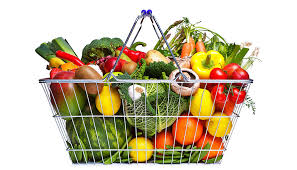
Buy seasonal fruit and veggies

imgres-2It sounds obvious but I don’t think many people realize that each season brings abundance of certain fruits and veggies compared to other months of the year. For example, in Miami, being the summer, there are lots of watermelons, mangoes and strawberries. Actually, I think we are blessed in this part of the US because we have a great variety of fruits and vegetables all year round. (Still some fruits are imported) However, for those who live in cooler areas or farther from the equator or in a remote island (I lived in Barbados so I can say this happens in the Caribbean islands) it’s crucial to understand what’s in season so you can buy fresh produce for a reasonable price. Most supermarkets and farmers will tell you what’s in season, normally the produce looks bright and beautiful, it has better flavour and it’s cheaper. Once you identify what you want to buy, plan meals around these food options. In some places, this approach to eating is called sustainable table. If you want to nourish yourself, your family and also care for the planet, this is great way to start. You will be happy to know you are supporting local farmers and you are creating a synchronicity with nature by eating what its offered to us in that specific time of the year.

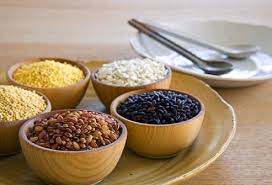
Experiment with grains

 When I was a little girl growing in Colombia, the main grain (and I ate it almost everyday) was white rice. To be fair with my parents, they also fed me oats, corn and barley soup. I only discovered whole grains in my late 20’s and even thenimages-13, I didn’t really eat whole grains. In my mind, they were only good if one was planning to loose weight (and I wasn’t) so I didn’t see the point in experimenting with these grains. Now that I am older and wiser, I realized I was missing out on the great benefits of grains. Yes, I know some people are gluten intolerant but not all of us are like that. If you are gluten intolerant, skip this section completely. But if you aren’t, grains are a great source of energy, they have been around for thousands of years (most ancient civilizations lived out of corn, quinoa, rice, among others) and they are not expensive. Of course, there are some that may be a bit more costly because they are imported but most of the time, they are reasonably priced. What type of grains? quinoa, amaranth (this one is gluten free), cornmeal, wild rice, brown rice, faro, barley, millet, there’s so many of them. As you embark in this journey, try different spices as well. Normally we tend to use the same spices again and again. Dare to be different, you will be surprised with what you can find.

Cook once eat twice

I am aware not many people enjoy cooking, so my advice is to cook more, divide into separate portions and freeze them. My husband, for example, loves his chilli con carne. When he is inspired to cook it (it takes him a good 2 hours in the kitchen, which he calmly manages with some cold beers) He cooks enough to make five or six portions so he can eat them whenever he pleases. In this way, you know your time in the kitchen is well worth the effort.

I hope with this information I can show you that it isn’t that expensive to eat healthy. Surely, organic is more costly but not every single item you buy has to be organic. If you can afford it, go for it, but if you cant, I still think its better to have a smoothie than a big mac meal. After all, its true that you are what you eat so don’t be easy or fake or cheap.

As I am exploring this path myself, I will also share recipes and tips along the way.

If you are already putting in practice any of these tips and it’s total success, please share it. I would love to know what you are doing.

Abrazos,