Bolitas Energéticas

IMG_0246

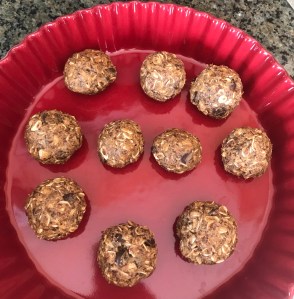
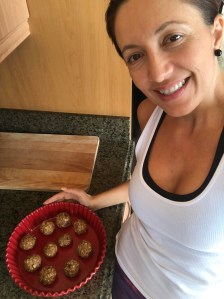
Anoche estaba conversando con una amiga que me preguntó “¿qué comes cuando tienes ganas de comer algo dulce?” Y esa pregunta me hizo pensar que este es un dilema que tiene la mayoría de las personas. Incluso si no tienes una debilidad por los alimentos dulces como yo, es útil tener algunas opciones que son fáciles y que puedes hacer en casa. Asi que, este blog trata sobre las bolitas energéticas.

Básicamente es una barra de energía hecha en una bola, cargada de proteínas, fibra y grasas saludables (y otros micronutrientes). El video de abajo puedes verme el acción y ya verás lo facil que son de hacer.

Mira el video aquí.

Continue reading

Energy balls

IMG_0249

Last night I was having a conversation with a friend who asked me “what do you eat when you feel like having something sweet?” And that question got me thinking that this is a dilemma that most people have. Even if you don’t have a weakness for sweet foods like I do, its useful to have some options that are easy and you can do at home. So this blog is all about the energy balls.

Basically its an energy bar made into a ball, full of protein, fiber and healthy fats (and other micronutrients).  The video I made to illustrate the recipe is in Spanish, but seriously, it’s so easy to do that even if you don’t speak Spanish, you will be able to replicate it at home.

See the video here.

Continue reading

Nuestros poderosos comensales

Hola, queridos amigos!

¿Recuerdas mi blog sobre Tus Peores o Mejores aliados? Este tema me parece fascinante porque hay muchas cosas que todavía no sabemos sobre los beneficios de cuidar nuestro microbioma. Si no sabes a qué me refiero con microbioma, te recomiendo que leas ese blog para que estés completamente conectado con lo que voy a compartir aquí.

Básicamente, nuestro microbioma (la comunidad de bacterias buenas y malas que viven en nuestro tracto gastrointestinal) es como la selva amazónica: diversa pero al mismo tiempo vulnerable si no nos preocupamos por ella, como deberíamos hacerlo.

Para que los seres humanos gocemos de una salud óptima, debemos proteger la diversidad del microbioma. Estas pequeñas criaturas son esenciales para nuestro bienestar. Creo que puedo predecir lo que estás pensando: está hablando de comer sano para evitar el sobrepeso y los problemas digestivos. Bueno, hay un poco de eso, pero hay mucho más que eso.

Numerosos estudios nos muestran la conexión entre nuestro microbioma y el sistema neurológico e inmunológico, así como la influencia del mismo en la expresión genética y el papel más obvio que es de la absorción de nutrientes para el funcionamiento adecuado del organismo.

Quiero centrarme en las tres primeras conexiones porque siento que no hay suficiente información disponible (a menos que realmente la busques) y estoy segura de que puedes aprender algo nuevo hoy.

images-1

Photo by Regeneratemagazine.com

Conexión del microbioma con el sistema neurológico

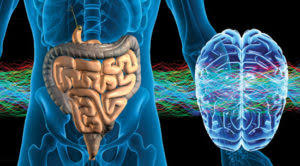
Diferentes estudios de investigación y revistas médicas demuestran la conexión entre nuestras bacterias sanas y el cerebro. De hecho, los neurotransmisores como la serotonina y la dopamina en realidad se fabrican en el intestino. La serotonina se usa dentro del cerebro y afecta nuestro estado de ánimo, comportamiento social, apetito, sueño, memoria y función sexual. La falta de serotonina conduce a la depresión, la ansiedad, el autismo, la esquizofrenia, entre otros. Por otro lado, la dopamina, que es otro mensajero en el cerebro, está involucrada en muchas actividades tales como patrones de comportamiento, cambios de humor, aprendizaje, factores motivacionales (recompensa y refuerzo). Cuando carecemos de dopamina, enfermedades como el Parkinson, la esquizofrenia y trastornos por deficit de atención con hiperactividad son más comunes que sucedan.

Para más información sobre este tema, haz clic aquí.

images-2

Photo by Gutmicrobiotaforhealth.com

Conexión del intestino con el sistema inmunológico
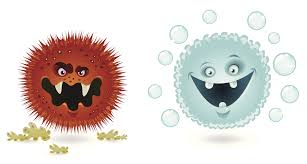
¿Sabía que alimentar a tu microbioma es la clave para luchar contra las enfermedades? ¿Y sabías que el 80% de tu sistema inmunológico está ubicado en tu intestino? Apuesto a que no lo sabias, pero es absolutamente cierto. Todos los días, hay más estudios que demuestran que todas las enfermedades se originan en el sistema digestivo y todo comienza con inflamación en el intestino. La inflamación ocurre cada vez que comemos cosas malas (alimentos fritos, alimentos procesados, alimentos con aditivos y hormonas, azúcares refinadas). Puedes vivir muchos años con inflamación y antes de que te des cuenta, la enfermedad ya está viviendo en tu cuerpo. Nuestras buenas bacterias disminuyen cada vez que comemos los alimentos equivocados y la única forma en que podemos mantenerlo sano (para que puedan luchar contra las bacterias malas y evitar enfermedades) es alimentarla adecuadamente.

Para más información sobre este tema, haz clic aquí.

Por último, tenemos la conexión entre el intestino y nuestros genes. Sorprendentemente, el microbioma se comunica constantemente con nuestros genes y tiene el poder de transformarlos. Nuestras respuestas metabólicas se ven afectadas por esta relación en el sentido de que si hacemos las “cosas correctas” ayudaremos a transformar esa expresión genética en positiva y, por lo tanto, estaremos sanos y felices. Por el contrario, si seguimos comiendo opciones poco saludables, fomentando altos niveles de estrés y se combina con poca actividad física, lo comunicaremos a nuestros genes también.

Entonces la pregunta es: ¿qué podemos hacer para que nuestros neurotransmisores (dopamina y seratonina) puedan hacer su trabajo correctamente? ¿Cómo podemos evitar caer enfermos?

La respuesta queridos amigos es muy simple: comer una dieta rica en vegetales, frutas, alimentos integrales y proteínas limpias. Fácil, ¿verdad?

images-3

Photo by Wellandgood.com

No solo eso, para aquellos que ya están mostrando signos de enfermedades, una dieta de eliminación funcionará mágicamente. El ayuno es otra forma de ayudar a tu cuerpo a curarse y restablecerse. (Escribiré un blog para discutir este tema más adelante). Algo que ya puedes ir haciendo es comer con consciencia: mastica lo suficiente, busca el espacio para nutrir tu cuerpo con respeto y amor y por supuesto hazlo con alimentos sanos.

Mi opinión es que los cambios son fáciles de integrar cuando somos conscientes de las conexiones dentro de nuestro cuerpo, así como las del mundo exterior. Todo afecta nuestro bienestar: los alimentos que comemos, el estilo de vida que elegimos, las relaciones que cultivamos, nuestra conexión con nosotros mismos y también con nuestro microbioma.

Confío en que este blog te inspire para buscar más información y comenzar a implementar cambios en tu dieta. Si necesitas ayuda, comunícate conmigo estaré encantada de ayudarte.

No te olvides de compartir, recuerda que esta información es muy relevante para todos.

Un abrazote!

The Powerhouse inside us

Hi there my friends!

Remember my blog about Gut Health? I find this topic fascinating because there is a lot that we still don’t know about the benefits of looking after our microbiome. If you don’t know what I mean by microbiome, I recommend reading that blog so you are fully connected to what I am about to share here.

Basically, our microbiome (The community of good and bad bacteria living in our gastro intestinal tract) is like the Amazon jungle: diverse but also vulnerable if we don’t care for it, as we should.

In order for human beings to have optimal health, we need to protect the diversity of the microbiome. These tiny critters are essential to our wellbeing. I think I can predict what you are thinking: she is talking about eating healthy to avoid overweight and digestive issues. Well, there is a little of that but there is so much more to it.

Numerous studies show us the connection between our gut and the neurological, and immunological system as well as the influence of the microbiome on gene expression and the most obvious, the role in the absorption of nutrients for proper body functioning.

I want to focus on the first three connections because I feel there isn’t enough information available (unless you really look for it) and I am sure you can learn something new today.

images-1

Photo by Regeneratemagazine.com

Connection of the gut with the neurological system

Different research studies and medical journals demonstrate the connection between our healthy bacteria and the brain. In fact, neurotransmitters like serotonin and dopamine are actually manufactured in the gut. Serotonin is used inside the brain and it affects our mood, social behaviour, appetite, sleep, memory and sexual function. Lack of serotonin leads to depression, anxiety, autism, schizophrenia among others. On the other hand, dopamine, being another messenger in the brain, is involved with many activities such as behaviour patterns, mood swings, learning, motivational factors (reward and reinforcement). When we lack dopamine diseases like Parkinson’s, schizophrenia and ADHD are more likely to happen.

For more information on this subject, click here.

images-2

Photo by Gutmicrobiotaforhealth.com

Connection of the Gut with the immunological system

Did you know that feeding your good bacteria is the key to fight diseases? And did you know that 80% of your immune system is located in your gut? I bet you didn’t, but it’s absolutely true. Everyday, there are more studies that show that all diseases originate in the digestive system and it all starts with inflammation in the gut. Inflammation happens every time we eat the wrong stuff (fried foods, processed foods, foods with additives and hormones, refined sugars). You can live many years with inflammation and don’t realize it and before you know it, disease is already living in your body. Our good bacteria decreases every time we eat the wrong foods and the only way we can support it (so they can fight the bad bacteria and we avoid diseases) is to feed it with real nutrients.

For more information on this topic click here.

Lastly, we have the connection between the gut and our genes. Amazingly, the microbiome communicates constantly with our genes and it has the power to transform them. Our metabolic responses are affected by this relationship in the sense that if we do the “right things” we will help to transform that gene expression into a positive one and therefore, we will be healthy and happy. On the contrary, if we continue living with bad habits, eating unhealthy, encouraging high stress and lack of physical activity, we will communicate this to our genes instead.

So the question is: what can we do to make it easier for our neurotransmitters to do their job properly? How can we avoid getting sick?

The answer my friends is very simple: eat a diet rich in vegetables, fruits, whole foods and clean proteins. Easy, right?

images-3

Photo by Wellandgood.com

Not only that, for those who are already showing signs of diseases, an elimination diet or fasting can help your body heal and reset. (I plan to write a blog about this soon)  Something you can start practicing now is mindful eating: chewing enough, finding the space to nourish yourself with respect and love for your body and of course eating healthy food.

My opinion is that changes are easy to integrate when you are aware of the connections inside our body as well as those in the outside world. Everything affects our wellbeing: the food we eat, the lifestyle we choose, the relationships we cultivate, our connection with ourselves and also with our microbiome.

I trust this blog inspires you to find out more information and start implementing changes in your diet. If you need help, let me know and I will happily assist you.


As usual, don’t forget to share, this information is useful for everyone.


Bear hugs!


Es sano o es basura?

images

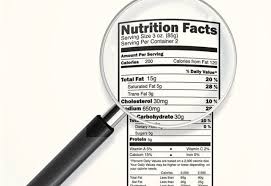
Queridos amigos y amigas! Como lo prometido es deuda, aqui les va un video corto y sustancioso para que se pongan las pilas y vean como es de fácil interpretar la información que aparece en las etiquetas de los alimentos. Hace 2 semanas ya comparti un blog sobre  este tema, asi que en el video de abajo lo explico con relacion a los macronutrientes.

Por supuesto que mi interés NO es que se vayan corriendo al supermercado a comprar comidas procesadas. Siempre los voy a motivar a que consuman alimentos en su forma natural: frutas, verduras, proteínas vegetales y animales (de buena calidad y en porciones moderadas), semillas, nueces. Sin embargo, soy realista y sé que en este mundo moderno y rápido en el que vivimos, la comida empacada y procesada siempre va a estar ahí, hace parte de nuestra realidad. Por lo cual pienso que es clave que entendamos que es exactamente lo que contiene y ver si realmente vale la pena consumirla y en que cantidades.

Así que espero disfruten y sobre todo aprendan de este video que lo hice con mucho cariño y muy motivada a seguir con ustedes el camino a nuestra mejor versión.

Video sobre como leer las etiquetas


Un mega abrazo para todos!


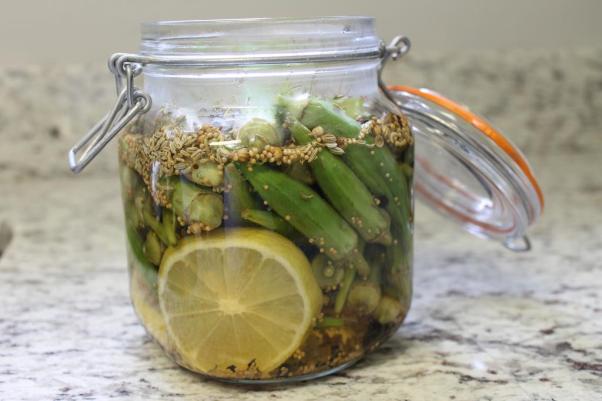
Fermented foods: Pickled Okra

If you had a chance to read my blog about Gut Health, you will remember I mentioned that fermented foods are great to help us protect and increase our good bacteria. Well, I decided to do this recipe and I loveeee it! It was easy and the best part is that they last long so I don’t need to eat them all at once. So go ahead and start fermenting!

pickled-okra3
Ingredients:
1 1/2 pounds of fresh Okra
4 garlic cloves
sliced lemons
2 cups of apple cider vinegar
2 cups of water
3 Tspns of salt
1 Tspn brown sugar
Spices:
1 tspn fennel seeds
1 Tbsp chili flakes
1 tspn black peppercorns

Continue reading

El detective de las etiquetas

images

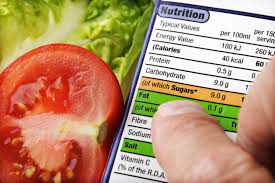
Hola mis queridos amigos! Como lo he mencionado en blogs anteriores, la mejor manera de comenzar tu camino hacia el bienestar y la plenitud es comer alimentos frescos no procesados, es decir que vienen de la tierra y no empaquetados. Sin embargo, soy consciente de que hay ciertos alimentos que vienen empaquetados que continuaremos comprándolos porque son convenientes y también porque nos son familiares. Así que teniendo en cuenta esto, vamos a hablar de la etiqueta de los alimentos en los productos alimenticios.

Sé que algunas personas ven la etiqueta del producto que compran, pero será que entienden realmente lo que dice? Esto es muy importante saberlo, ya que proporciona la información que necesitamos para tomar una decisión informada.

Así que vamos a repasar la etiqueta.

  • Los ingredientes se enumeran en orden decreciente de acuerdo al peso. Así que si ves el azúcar en la parte superior, por ejemplo, regresa el producto al estante del supermercado. Hay por lo menos 61 nombres para el azúcar utilizados en las etiquetas de alimentos y muchas veces hay un buen número de estos en un solo producto. Si quieres ver la lista, haz clic aquí. Otra pista: si no se puede pronunciar la palabra, no es seguro para tu salud.
  • Evitar las grasas parcialmente hidrogenadas que también se conoce como grasas transaturadas. Estas son químicamente, procesadas  lo que eleva el colesterol malo (LDL) y disminuye el colesterol bueno (HDL). Normalmente se pueden encontrar en el tocino, jamón, salchichas, alimentos congelados y algunos alimentos enlatados.
  • La sal (40% sodio y 60% cloruro) se encuentra en muchos alimentos y tendemos a adicionarle más antes de comerlos. Busca alimentos que no tengan sodio añadido y si lo tiene, elige los etiquetados como “sin sodio”, que tienen menos de 5 g en una porción o “bajo en sodio”, que tiene menos de 140 g por porción. Para tu referencia, 1500 mg de sodio equivalen a 0.75 de una cucharadita o 3,75 gramos de sal por día. Esta es la cantidad ideal para la mayoria de los adultos. Revisa este enlace para mas informacion.
  • Estar al tanto de las tácticas de mercadeo. En los Estados Unidos, por ejemplo, el uso de la palabra “natural” para describir los productos alimenticios para humanos no se define estrictamente por la FDA. Muchos alimentos pueden tener esta palabra en el paquete, pero no hay nada natural en ellos. Así que de nuevo, revisa los ingredientes para ver los detalles.

Ojo! si te comes 2 porciones, multiplica x 2 las cantidades de los ingredientes. No espero que lleves una calculadora para ver cuánto de esto o aquello te estás comiendo, mi punto es ser conscientes de las porciones. Debido a que cuando se multiplica por x 3 comidas al día x semana x mes x año  todo va sumando.

images-3

Otros puntos a considerar:

  • Algunos alimentos enlatados son opciones saludables: las legumbres son un buen ejemplo. Si usted no tiene el tiempo para cocinar o remojar los frijoles durante la noche, las legumbres enlatadas son una gran segunda mejor opción. Sólo asegúrese de que sean bajos en sodio o sal y que no tengan aditivos.  
  • El yogurt natural no es  dulce así que para realmente aprovechar sus propiedades, evita comprarlo con azúcar. Si deseas agregar dulce, puedes encontrar opciones más saludables como la miel cruda, stevia o miel de agave. Ojo! no asumas que porque son endulzantes naturales que no suman calorías! Si estás buscando mantener tu peso, debes prestarle atención a las cantidades que se consumen.

La Asociación Americana de Cardiologia (AHA) recomienda:

Limites de azucar diarios: 

Mujeres: 6 cucharaditas (25g))

Hombres: 9 cucharaditas (38g)

Niños de 3-6 cucharaditas (12-25g)

Ten en cuenta que ni siquiera estoy tocando el tema de calorías, mi punto principal son los ingredientes. Así que actua como un detective! Recuerda que tu estás en control, tu eres la mejor persona para cuidar de tí mismo.

En mi proximo blog, les mostraré un video sobre como leer adecuadamente las etiquetas de los alimentos asi que quédate atento. (Proxima semana)

Gracias por leer este blog y como siempre si estás aprendiendo algo nuevo, no olvides compartirlo. Todo lo que les comparto es con amor y dedicación para guiarlos en su camino a ser felices y saludables.  

Un fuerte abrazo!

Referencias

http://sugarscience.ucsf.edu/hidden-in-plain-sight/#.WcVv7iMrIgo

http://sugarscience.ucsf.edu/hidden-in-plain-sight/#.Wcm1oiMrIgp


Become a food label detective

ben-jerry-dublin-mudslide-ice-cream-nutrition

Hi there my friends! As mentioned in previous blogs, the best way to start your path to wellness is to eat fresh unprocessed foods, meaning eat from the earth and not from packages. However, I am aware there are certain foods that will come in packages and we will continue buying them because they are convenient and also because they are part of what we know. So knowing this is going to be the case, let’s talk about the food label in packaging.

I know some people look at the label in the product, but do you actually understand what it says? This is very important because it provides the information you need to make an informed decision.

So let’s go over the label.

  • Ingredients are listed in descending order by weight. So if you see sugar on the top, for example, put it back on the shelf. There are at least 61 names for sugar used in food labels and many times there are quite a few in one product. If you want to see the list, click here. Another clue is, if you can’t pronounce the word, it is not safe for you so don’t eat it.
  • Avoid partially hydrogenated fats which are also known as trans fats. They are chemically processed, which raises bad cholesterol (LDL) and lowers good cholesterol (HDL). Normally you can find them in bacon, ham, sausages, frozen foods and some can foods.
  • Salt (made of sodium 40% and chloride 60%) is in many foods and we tend to add more before eating it. Look for foods that have no added sodium and if you do, choose those labeled “sodium free”, which have less than 5g in a serving or “low sodium” which have less than 140g per serving. For your reference, 1500 mg of sodium amounts to 0.75 teaspoons or 3.75 grams of salt per day. This amount is the ideal limit for most adults. Check this link for more information.
  • Be aware of marketing tactics. In the United States, for example, the use of the word “natural” to describe human food products is not strictly defined by the FDA. Many foods can have this word in the package but there is nothing natural in them. So again, check the ingredients to see the details.

And if you eat two servings, multiply x 2 the quantities of the ingredient. I don’t expect that you carry a calculator to see how much of this or that you are eating, my point is to be mindful of the servings. Because when you multiply that for x 3 meals a day x week x month x year…it all adds up.

images-3

Other points to consider:

  • Some canned foods are healthy options: legumes are good examples. If you don’t have the time to cook or soak beans overnight, canned legumes are a great second best option. Just make sure they are low in sodium (or salt) and there are no added ingredients.
  • Yogurt is not meant to be sweet so to really get the benefits avoid buying sweet yogurt. If you want to add sweetness to it, you can find healthier options such as raw honey, stevia or agave nectar. Also, do not assume that because they are natural sweeteners they don’t add calories! If you are looking to keep your weight down, be aware of the amounts you are consuming.

The American Heart Association (AHA) recommends:

Daily added sugar limits:

Women: 6 tsp (25 g)

Men: 9 tsp (38g)

Children 3-6 tsp (12-25g)

Be aware that I am not even discussing calories here, my main point is the ingredients.  So be a detective! Remember that you are in control, you are the best person to look after yourself.

In my next blog, I will show a video about how to best understand food labeling, so keep an eye on it. (Next week)


Thank you for reading this blog and as always if you are learning something new, don’t forget to share. Everything I share with you is with love and dedication hoping to guide you in your path to become a healthier happier YOU.


Other references

http://elevate.com.au/supermarket-sugar-connection-guide/

http://sugarscience.ucsf.edu/hidden-in-plain-sight/#.WcufHyMrIgp


Banana Coconut Mini Cupcakes


IMG_5379 (1)

By: Maria X Ospina

Servings: 12 mini cupcakes

This recipe is super fun, easy and simple. I love to do it as a treat for my nephew who also loves cupcakes. It is light and healthy because it only has the sweetness of the banana and the blueberries.

Directions:

Place all ingredients in the blender until bananas are fully broken down. Pour a bit of the batter in the mini cupcakes baking dish just to cover the bottom fully. Then add a couple of blueberries and finally continue to add the rest to fill the cup. Decorate with a blueberry on the top.

Bake for 35 to 40 minutes on 325F (160 C) depending on the oven.

Your kids will LOVE them!

Continue reading

Interview with Dr. Pamela Popper

Highlights of the interview with Dr. Pamela Popper author of the book “Food as Medicine”

imgres-1

There are lots and lots of books related to health and dieting but there are a few authors who have the courage to say things as they really are. What do I mean by that? Doctors who publically raise the issue that the health system in the United States is not a health system but a sick system considering the influence of the food and pharmaceutical industries in our decision making, food politics and lack of clear information to consumers like you and me. This is the reason I got interested in Dr. Pamela Popper.

I first heard about Dr. Popper watching the documentary “Food Choices” and later on I read her book “Food as Medicine” where she talks about these specific aspects: food as a way to avoid diseases, over medication and lack of honest information for consumers. So to make the story short, I had the incredible opportunity to interview Dr. Popper and ask her about specific parts of her book which now I can share with you. The full interview was 40 mins so I decided to summarize the session and show you the highlights. Everything I write and share is with a high dose of love and dedication so I hope you find it useful.

MXO: Dr. Popper you are an advocate for a plant based diet. Can you briefly, in layman terms, explain why you recommend this diet?

Dr.Popper: Well, there are two major  examples to show why this diet is the best for humans. The first thing is that if you look around the world, there are still a few places left where the diabetes rate, cancer rate, heart diseases rate are very low, and these people eat a plant-based diet, and this should be a clue. I mean our health statistics in the United States are terrible, we are eating a diet that is comprised of animal foods and processed foods so that is a clue. Another very significant clue we have is a growing number of studies where using a plant-based diet has shown to stop the progression of or reverse conditions like diabetes, coronary artery disease, even some cancers, so between those two we have a pretty powerful case we can make for eating a plant based diet.

MXO: What do think about animal protein? Do we really need it?

Dr. Popper: There are economical reasons throughout history to explain why eating animal protein became popular. In wealthy areas, people would eat more and more animal foods, and it was considered the food of rich people which many aspires to. And it’s an honest inverse relation between the increase of animal food intake and the health status which goes down at the same time, so that is what’s actually happening. We have been told that we need animal protein and this is mythology. My take is that there is no compelling reason to include it in the diet. For people like me who don’t eat any of it, I am not missing out on something, I am not going to be deficient in anything. For people who insist that they must have some, then at least limit it to the amount that is eaten by people who live in areas of the world where they have significantly better health.

MXO: Moving away from animal protein also means we need to bring more variety of food in our plate. What can you advise people to start diversifying their foods?

Dr. Popper: I have a lot of clients is my wellness center who are picky eaters and what I tell them is that variety is a luxury of western civilization. The story of a specific person comes to me, a guy who had very compelling medical reason to change his diet, he was scared to death. Right away he said to me “I don’t like the food that you eat” however, I am willing to do it. So I said to him “every so often I would like you to try something that is just new”, we went through the foods that he likes (that are healthy) and he started adding new ones every now and then. Last time I saw him he said “Guess what? I ate kohlrabi” and I thought, now he is getting adventurous! I can see that giving him a comfort zone to start from and get more adventurous later on was the way to go.

I also tell people they need to have this visualization in your head, when you go into the grocery store, farmer’s market or whatever, I want you to think about food as drugs as my book Food over Medicine like this: There are some vegetables that are called cruciferous vegetables, I want to choose a couple of those “drugs”, there’s a class of fruits called stone fruits, so pick some of those “drugs” too (peaches, cherries), then we have leafy greens, this one is a great set of drugs too, tubers, etc. When you start seeing these foods as foods that can heal your body, and maintain your body, this will make a huge difference.

MXO: Let’s talk about over testing and overmedication. You mentioned in the book that many times patients are asked to get a lot of unnecessary tests that can actually cause health problems such as infections or simply create unnecessary panic. What would you recommend to people when they are faced with this situation?

Dr. Popper: Well, unless it is an emergency, If I was in a car accident and I am bleeding, I don’t want a bake potatoe and a copy of the China Study (Study about effects of nutrition in health), I want to be taken to a hospital and get the best of western medicine: anesthesia, drugs, surgery, anything that is required. Most of the time medicine is about sitting in a doctor’s office and been told to take this drug, do this treatment, get this test, so the answer (from consumers) should be “that’s an interesting idea, I want to research about this information you are giving me so please provide me with information sources that back up what you are advising me to do. Once I review it I will come back to you with my decision”. Medicine should not be about a patient agreeing to anything the doctors says, we need to ask ourselves: what are the side effects of taking the drugs or having a test done? Will the testing reduce my risk of dying? If the answer is no, then don’t do it. Basically, assess the risks and the benefits of doing what the doctor is advising. If you buy a house in this country, you make sure you understand all the details of the house and the commitment you are getting yourself into. It should be the same approach.

MXO: How can health coaches work together with medical professionals to improve the health of the population?

Dr. Popper: There are good medical professionals who are out there and take their profession very seriously. Some even take nutrition classes which is great. What health coaches can do is to empower the patients, prepare them to have a real conversation with their doctor, to help them look at everything: is this a good idea or a bad idea? ask more questions and take control of the situation.

Health coaches can help educate consumers and guide people through habit change in a way it is sustainable and lasting.

I am grateful that I had the chance to talk with Dr.Popper and be able to share valuable information with all of you. If you want to learn more about her work visit her websites: http://drpampopper.com/ , http://wellnessforumhealth.com/about/dr-pamela-popper/ .


Hasta la proxima!